
A foam insert that looks right in a drawing still needs to work with the product. A physical sample makes it easier to assess how the product sits in its pocket, how it can be lifted out, whether the lid closes and how narrow sections of foam behave. Waterjet sample cutting helps packaging manufacturers and businesses that package their own products evaluate these details before deciding on production.
Samples for your project. At İkram Lazer, we offer waterjet sample cutting for foam and sponge parts. Samples prepared for a fee let you assess product fit before production. We prepare a project-specific quotation based on your drawing, material and requested quantity.
What does waterjet cutting offer for foam samples?
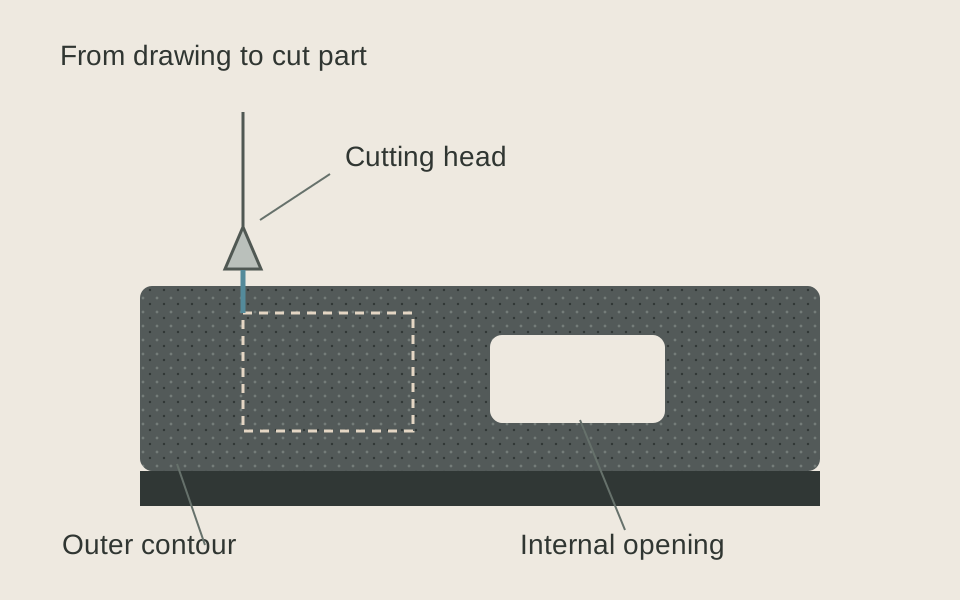
Waterjet cutting separates the material with a thin stream of water following a defined path. The cutting head traces the outer shape and the internal openings in the drawing. Soft materials such as foam and sponge are among the applications for waterjet sample and part preparation. The process does not rely on melting the material with a laser beam.
Turning the drawing into a physical sample makes it possible to evaluate use as well as appearance. Clearance around a product may look sufficient on screen but feel too tight or too loose in practice. Cutting the drawing in the intended material reveals this difference. Our service is assessed for foam and sponge samples, with suitability confirmed from the details of each project.
Box inserts, case layouts and product pockets
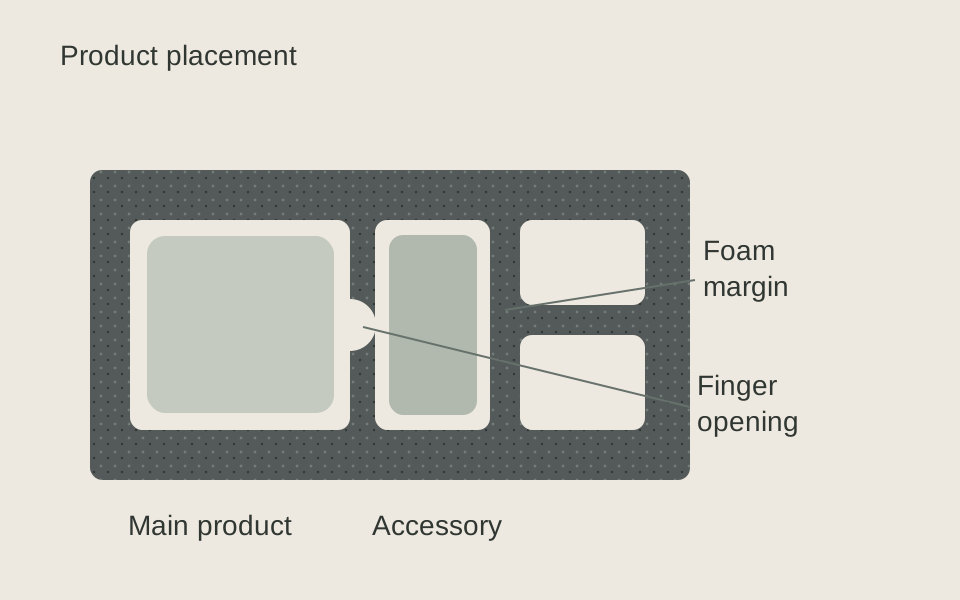
A foam insert gives products defined positions within a box or case. A device, its cable and its accessories can all have different shapes. Separate pockets make the packing sequence and the way a customer removes each item part of the design.
A narrow finger recess can make a product difficult to grip, while an oversized pocket can leave it loose. The foam between adjacent pockets also flexes during use. Trying the actual product in the insert is therefore more informative than checking the outer dimensions alone. The illustration explains these relationships; it is not evidence of transport performance or protection for a specific product.
How is a business sample project planned?
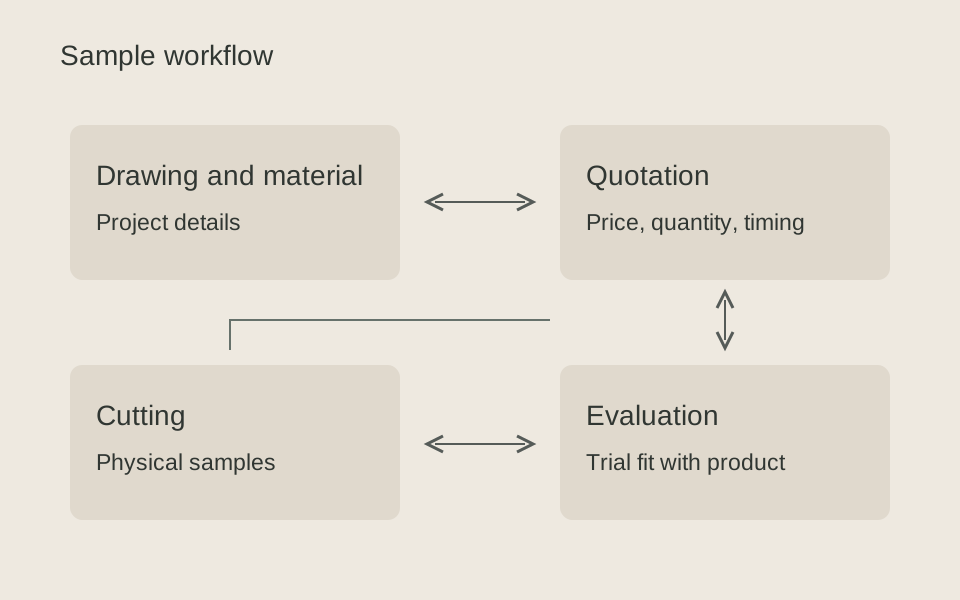
A sample project translates the needs of a product into a physical material. We plan waterjet cutting for foam and sponge parts around the drawing and material. The quotation covers preparation, cutting and sample quantity, so the scope and price are agreed before cutting. The resulting parts allow you to assess product fit and the arrangement inside the packaging.
Several samples can support trials with different products or allow production and purchasing teams to inspect equivalent parts. When several drawings, thicknesses or materials are involved, their quantities and preparation requirements are considered together. Repeating one part and preparing several different designs involve different work. Defining the project this way keeps the sample delivery and quotation clear from the outset.
Which drawing details affect the result?
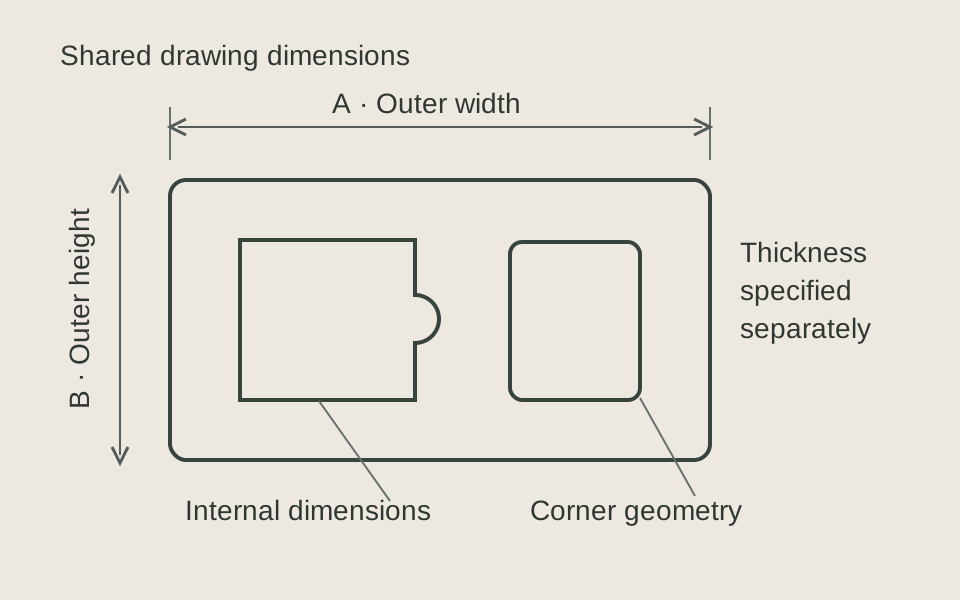
A quotation review brings together the drawing or a photograph of an existing part, outer dimensions, material, thickness and quantity. The positions of internal openings matter as much as the outer boundary. Contact with a box wall or lid, or interference with an adjacent accessory, often depends on this internal arrangement.
A photograph can provide a useful starting reference. Perspective can alter the apparent dimensions and corner shapes, so the dimensions used for cutting are agreed separately. Drawing units, the current revision and a clear distinction between cutting contours and other lines provide a shared reference. If a drawing already exists, its file format is reviewed for suitability before preparation.
The reference surface used to measure a pocket also matters. A product body, projecting connector or gripping area can each require different clearances. Explaining these features helps the sample represent its intended use as well as its outline.
Why does the same shape behave differently in different foams?
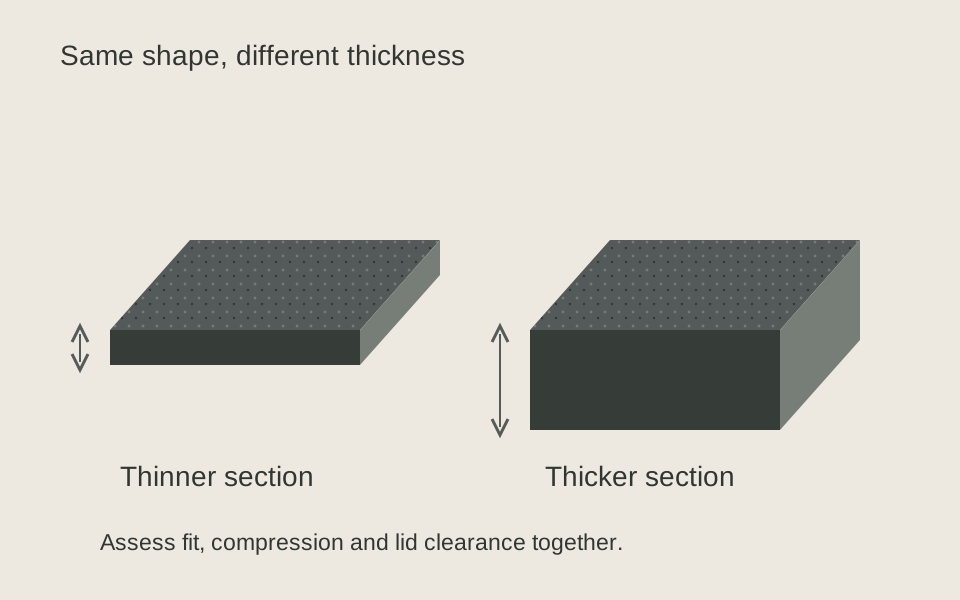
Foam, sponge and EVA are sometimes used loosely in everyday descriptions, but sheets can have very different structures and behaviour. Thickness, hardness, density and any surface layer can affect how a product sits in a pocket. Two parts with the same outer dimensions may feel different and compress differently under a product’s weight.
A known material name or supplier code provides a useful starting point for review. Adhesive-backed, laminated and multilayer sheets are considered with their complete construction. Cutting suitability depends on the material, thickness and geometry; a single capacity limit is not assigned to every foam. A sample prepared in the intended production material provides a closer reference for the final fit.
What can a physical sample reveal?
Product placement is the first assessment. The product should fit without excessive force, remain accessible for removal and allow the lid to close. Narrow foam sections that stretch excessively when the product is removed, or distort an adjacent pocket, can reveal areas of the drawing that need revision.
Cut-edge appearance, pocket shape and fit across samples are also part of the comparison. A fit issue can involve material choice, product dimensional variation or the box’s internal space as well as the cutting operation. Distinguishing these factors helps make the next revision more focused.
Fit inside an insert and adequate protection during transport are separate assessments. If impact, vibration or shipping performance is a requirement, suitable packaging validation is considered separately. Sample cutting does not replace transport testing or certification.
What determines a waterjet sample quotation?
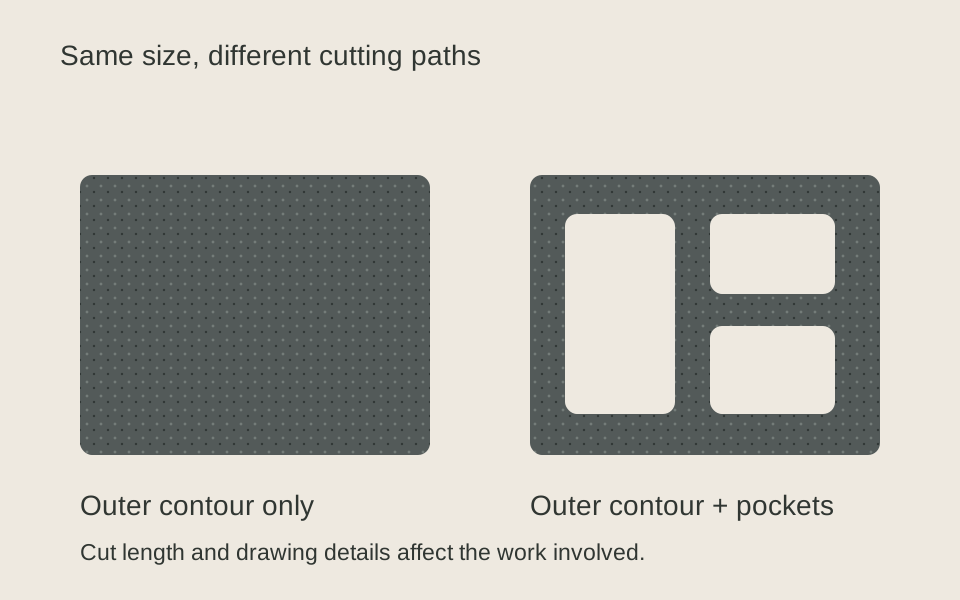
We prepare your sample-cutting quotation by considering the part dimensions, material properties and cutting details together. Cut-path length, the number of internal openings, material type and thickness, quantity and drawing preparation affect the scope. Two foam parts with identical outer dimensions can involve very different work if one has a single outline and the other has several small pockets.
Who supplies the material, available sheet dimensions, the distribution of different designs and delivery arrangements also help define the quotation. The cutting price follows a review of these details. Lead time is confirmed against the drawing, material availability and work schedule. A defined project provides a clearer basis for price and timing than an example image or quantity alone.
Moving from samples towards production
Once a sample has answered the product-fit questions, repeat production can be assessed separately. Supplying waterjet-cut parts and supplying a steel rule cutting die are different services. A sample-cutting quotation covers the foam parts; a die for repeated press cutting is considered under a separate scope.
Quantity, the frequency of design changes, material and the intended production method inform that next decision. Recording any sample revision in the drawing also helps later orders use the same version. Our EVA and foam cutting die service is relevant when tooling is needed. Our waterjet cutting service is the starting point for discussing your foam sample project.
Frequently asked questions
How is the sample quantity agreed?
The part, number of designs, material and preparation requirements are considered together. The working quantity and total price are agreed at quotation stage.
How are samples priced?
We prepare a quotation for your drawing, material, thickness and quantity. The preparation and cutting scope and total price are agreed before work starts.
Can one enquiry include different designs?
Drawings, materials and quantities for different designs can be submitted together. Preparation and cutting requirements for each design are considered in the quotation.
Can I enquire before I have a drawing?
A photograph of an existing part, outer dimensions and intended use can support an initial review. The drawing and dimensions used for cutting are agreed before production.


