
Gasket cutting dies are tools that cut the outer profile, internal opening and holes of a gasket from sheet material. In flatbed die cutting, steel cutting rules held in a carrier perform the cut. A request for a gasket knife may refer to the complete tool. Specify whether you need tooling for your own press or finished cut gaskets.
What is a gasket cutting die?
A gasket cutting die reproduces the outside profile, central opening and required holes of a flat gasket. In a flatbed steel rule die, shaped cutting rules are supported in a carrier. A press pushes the cutting edges through the sheet along the defined contours.
The terms gasket die, gasket cutting tool and gasket press knife may refer to the assembled tool, depending on the supplier and tool construction. When specifying components, the cutting rule means the steel element; the die includes its carrier and any auxiliary parts required for the job. This distinction matters when ordering a replacement rule instead of a complete tool.
In Turkish enquiries, “conta bıçağı” and “conta kesim kalıbı” can name the same assembled die. The shorter trade term and the fuller technical description do not define different classes of supplier. A drawing and a clear description of the required delivery are more useful than assuming terminology alone settles the scope.
What does a gasket do?
A gasket controls passage between two mating surfaces. Compressed between a cover or flange pair, a suitable flat gasket conforms to small surface irregularities and limits unwanted liquid or gas leakage. In another application, the same principle helps keep dust and water out of an enclosure.
- Keep fluid inside a joint: At pipe, housing and cover connections, the gasket contact path surrounds the intended fluid passage.
- Separate internal and external environments: A continuous gasket around an equipment cover or panel contributes to environmental protection.
- Provide compliant contact: Suitable foam or elastomer parts can also help reduce contact-related vibration and noise in some assemblies. Compression and loading conditions are defined for that function.
Whether a part acts as a seal, spacer or cushion depends on its role in the assembly. Explaining what it seals, where it is compressed and which surfaces it meets helps the die maker understand the importance of holes, narrow bridges and contact width alongside the outer profile.
Which industries use gaskets?
The application location matters alongside the industry name. A pipe flange, control box and ventilation cover in the same facility can require different gasket constructions. These examples show how the intended function translates into a specification for a sheet-cut part.
Machinery and industrial maintenance
Housing covers, pump connections and joints opened during maintenance are common gasket locations. Tooling requirements include fit against the mating part, fixing-hole positions and retention of the cut part's shape during assembly. For replacement work, review the condition of an old sample alongside the current drawing.
Automotive and vehicle equipment
Sealing parts are used at covers, enclosures and auxiliary-equipment joints. Heat, oil contact and outdoor exposure influence the material grade. Special multilayer products such as engine cylinder-head gaskets require manufacturing expertise beyond the flatbed sheet cutting described here.
Heating, cooling and ventilation
Duct joints, filter frames and equipment service covers use seals to limit unwanted air passage. Frame corners, narrow edges and thickness relative to the assembly gap matter. With adhesive-backed sheet, include the release liner and intended assembly sequence in the cutting brief.
Electrical, electronic and equipment enclosures
Gaskets around boxes, cabinets and covers contribute to dust and water protection according to the design. Corner continuity and compression when the cover closes are considered together. The required protection level is verified with the chosen material and the assembled product.
Food and beverage equipment
Gaskets are used in process connections and equipment covers. Product contact, cleaning agents and temperature cycles inform material selection. Provide the product code and traceability of an approved sheet grade; colour or the word “silicone” alone does not establish suitability.
Chemical, water and process plants
Flanges, valves and tank connections are examples of gasket applications. The fluid and operating conditions govern material selection. Once that choice is approved, die preparation transfers the agreed contour, hole pattern and sheet properties into the cutting-tool specification.
Gaskets in telecommunications and antenna systems
Environmental sealing and electromagnetic interference protection (EMI/RFI) are separate functions in telecommunications enclosures. A suitable conductive gasket can contribute to electrical continuity across a joint as part of the shielding system. A standard sheet selected for water and dust sealing should not be assumed to provide the same function.
Antenna interfaces also use application-specific gaskets. State the function and approved material code when requesting an antenna gasket so that the manufacturing method can be assessed.
Gaskets in aviation and industrial machinery
Gaskets are used in aviation electronics and in the housings, covers and connections of industrial machinery. Material and cutting geometry are specified according to the equipment’s operating conditions and assembly requirements. The gasket cutting die is prepared to the approved drawing and material specification. Required traceability documents and acceptance checks are agreed before ordering.
How gasket cutting dies work
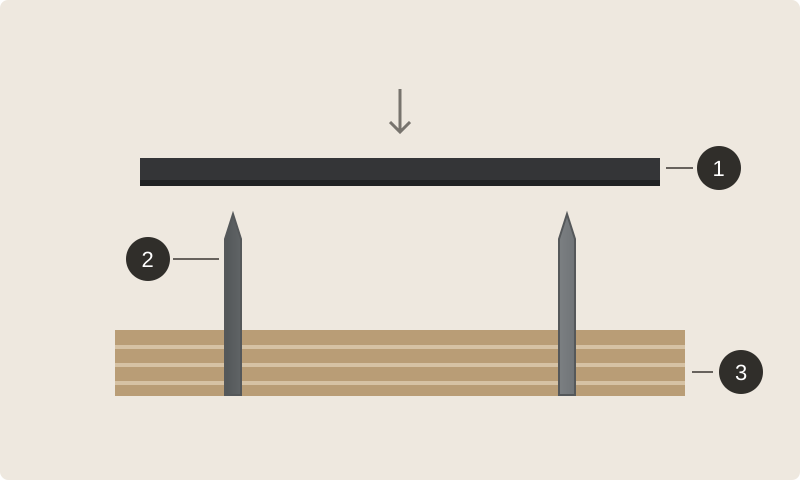
Rule thickness, height and cutting-edge geometry are selected with the substrate and press in mind. A plywood dieboard supports the cutting rules in their slots. Where appropriate, ejection rubber helps release the sheet after cutting. Small holes may call for suitable punches as part of the tool design.
The contour in the tool is only part of the dimensional result. The sheet can compress during cutting and recover afterwards. Measurements of the cutting tool and measurements of the relaxed finished gasket therefore need to be considered separately.
This construction concerns flat sheet-cut parts. Moulded three-dimensional rubber seals use different tooling and processes. A flat ring gasket and an O-ring with a circular cross-section are also different types of component, even though both may look circular from above.
Single-cavity and multi-cavity gasket dies
A single-cavity die carries the cutting contour for one part. A multi-cavity die places repeated parts, or different parts intended for the same run, in several positions on a sheet. Selection takes account of order quantity, sheet size, the usable press area and how the material is held during cutting.
More cavities do not automatically mean lower cost. Review the layout alongside required cutting force, internal-waste removal and usable sheet area. State the intended number of parts per press stroke as well as the outside tool dimensions when requesting a comparison.
What does the laser actually cut?
Ask which material is being laser cut. For a laser-cut dieboard, the laser can create the slots that locate the rules in plywood. The steel rules are then shaped and fitted. Later, the press and cutting edges separate the gasket material.
With direct laser cutting, the laser follows the gasket profile in a sheet that has been confirmed suitable for the process. A dedicated physical die carrying that profile is not required. A request for a “laser gasket die” should therefore specify whether the buyer expects tooling or finished parts.
Rubber and technical sheets cannot be treated as one universal laser material. Composition, additives, heat effects and the required edge condition affect suitability. Trotec lists PVC and PTFE among unsuitable materials. Use the substrate technical and safety data together with the equipment manufacturer's processing guidance.
How does dieless gasket cutting work?
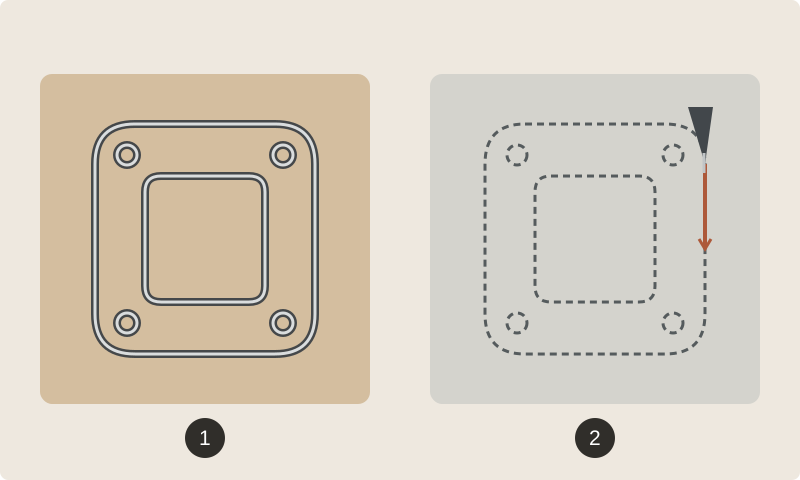
Dieless gasket cutting follows a digital contour without making a dedicated cutting die for every shape. CNC describes the control approach rather than one particular cutting tool. Digital knife systems may use an appropriate oscillating blade; waterjet and laser processes have their own material and equipment requirements.
Dieless production still needs preparation: a cutting file, a way to hold the sheet, an appropriate tool and a cutting sequence. A request for a “dieless die” usually means finished gaskets made without commissioning a physical die. Stating the required parts and quantities removes this ambiguity.
Digital cutting can simplify short runs, prototypes and frequent design changes. A steel rule die can be evaluated for a settled design with repeat orders. There is no universal quantity at which one method becomes cheaper: contour length, hole count, sheet layout, substrate and available equipment all matter.
Choosing between a die and digital cutting
Send the same drawing, material specification and delivery scope when comparing quotations. A tooling-only price and a price for finished cut parts represent different purchases. Tooling cost should be separated from the cost of cutting each batch.
- Frequent revisions: compare preparation time for each change and whether a new physical tool is needed.
- Repeat orders: include storage, setup and maintenance in the longer production plan.
- Narrow bridges and many holes: establish how the sheet is held and how internal waste will be removed.
- Expensive material: compare multi-up layouts and material yield as well as cutting time.
A prototype with changing mounting positions and a repeat maintenance gasket may need different approaches even if their overall profiles look similar. Define the part's requirements before choosing the process around a supplier's available machine.
How material specifications affect the decision
Rubber gasket cutting is not a single process recipe. For NBR and EPDM sheets, state the grade, thickness, hardness and any reinforcement. Silicone, foam, felt and cork gaskets also need consideration of their individual compression, recovery and edge behaviour. Two sheets within one family can cut differently.
For fibre-based gasket sheets, give the manufacturer and product code rather than relying on a broad trade name. PTFE and metal-reinforced sheets require a separate process suitability review. A list of material names is not a statement that one die or laser setup can process all of them.
Cutting suitability and service suitability are separate decisions. Temperature, pressure, fluid and joint conditions belong in the application assessment, using material manufacturer data and the responsible engineer's requirements. Correct dimensions alone do not establish sealing performance.
What belongs in the drawing?
A custom gasket drawing should identify the outside contour, internal opening, bolt holes and any notches in one current revision. State units and scale. When sending a DXF cutting file, include a dimensioned PDF to help resolve unit or revision differences between systems.
For flange gaskets, hole centres and assembly orientation affect fit. Mark critical dimensions with their required tolerances. Assigning the same tight tolerance to every feature can obscure what actually matters. The hole-centre and dimensional-control guide explains this topic in greater detail.
An old sample may be compressed, swollen or worn. Review it against an intact reference and mating-part dimensions. See the sample-check guide for the inspection stage and the internal-waste guide for hole clearance after cutting.
Gasket supplier or die maker?
A gasket supplier may stock finished seals, cut custom sheet parts or offer several sealing products. A die maker prepares the cutting tool used in production. One company can perform more than one role; its name does not define what a quotation includes.
Start with “We need a die for our own press” or “We need finished gaskets to this drawing.” Agree who supplies the material, who cuts the parts and who approves dimensions. This makes quotations easier to compare and directs technical questions to the right person.
İkram Lazer's gasket cutting die service concerns enquiries for steel rule tooling. The discussion of direct laser, waterjet and digital knife cutting here explains process alternatives; it does not state that İkram Lazer supplies all those cutting services.
What should you clarify with a gasket die maker?
Ask who prepares and approves the drawing, which press the tool is designed for, and who checks the first cut. Include how an existing tool will be assessed if the material or drawing revision changes.
When contacting a cutting-rule supplier, specify whether you need worn rules replaced or a complete new die with its carrier. A technical quotation that states this scope helps you compare different work offered under similar names.
What makes a suitable gasket cutting die?
A suitable die is prepared to reproduce the approved part under the intended sheet and press conditions. Assessment covers the shape of narrow features, hole alignment with the assembly and release of the cut part, as well as the outer cutting line.
Check the first sample against the critical dimensions and assembly fit defined by the technical owner. Keeping the drawing revision and material specification consistent makes repeat orders easier to compare. A shared reference between the die maker and the cutting operator helps identify dimensional or material changes early.
The gasket die sample-inspection guide covers detailed acceptance checks.
Information needed to order a gasket cutting die
Send a technical drawing or sound sample with the material grade, sheet thickness and working area of your press. For a multi-position die, include the number of parts required per stroke.
Ask for tooling, drawing preparation and shipping costs to be itemized. An order for finished cut gaskets also includes material and cutting costs.
For repeat orders, provide the previous tool or drawing reference. Changes to material, thickness or dimensions require a check of the existing die.
Gasket cutting die production with İkram Lazer
At İkram Lazer, we manufacture gasket cutting dies. We review the outside contour, internal openings and holes from a technical drawing or sound sample. Material thickness, hardness and press dimensions inform the preparation of single-part or multi-position tools.
For NBR, EPDM, rubber, foam or felt sheet, include the material code in your enquiry. Send your drawing or sample to discuss our gasket cutting die service.
Frequently asked questions about gasket cutting dies
1Are gasket cutting rules and cutting dies the same?
Both terms may refer to the finished tool in an enquiry. In a component specification, the rule is the cutting steel; the die includes the carrier and auxiliary components.
2Does a laser-prepared die cut the gasket with a laser?
A laser may cut the rule slots in the carrier. Steel rules under press force then cut the gasket sheet. Direct laser cutting of the sheet is a different process.
3Does dieless gasket cutting require a drawing?
Yes. The machine needs digital data defining the outside profile, holes and dimensions. Work that starts from a sample still requires preparation of this cutting data.
4Can a gasket die cut every material?
Rule and tool construction are selected for particular materials, thicknesses and press conditions. Check the existing die when changing from rubber to felt or to a different sheet hardness.
5What affects the price of a gasket cutting die?
Contour length, hole count, layout and tool components affect cost. Check whether drawing preparation and shipping are included. Tooling and finished cut gaskets are different quotation items.
6Can a gasket die be made without a technical drawing?
A sound sample can be measured and drawn. Check compressed or swollen old parts against the mating component before copying their dimensions; the customer approves the production drawing.
7Which drawing files should I send for gasket tooling?
Include a dimensioned PDF with the DXF file. Identify units, scale, material thickness and revision. A visible outline alone may not communicate the critical dimensions.
8What material information does the die maker need?
Provide the manufacturer or product code, sheet thickness and hardness if available. Identify adhesive, release liner or reinforcement layers, since the layer structure can change cutting behaviour.
9Should I choose a single-cavity or multi-cavity gasket die?
Consider quantity, sheet size and the working area of the press together. Multiple cavities can produce more parts per stroke; the available cutting force and waste-removal arrangement must also suit the layout.
10Is the release liner cut on adhesive-backed gasket sheet?
That depends on the required delivery format. Fully separated parts may be cut through all layers; parts retained on a liner require controlled kiss cutting. Specify the intended separation and layer structure.
11Do small holes need a separate punch?
Hole diameter, sheet thickness and hardness are reviewed together. A hole punch may suit the job. See the internal-waste removal guide for more detail.
12Can only the gasket cutting rules be replaced?
Rule replacement may be possible if the carrier and slots remain suitable. Send photographs, the drawing and a description of the cutting problem to the die maker; repair depends on the condition of the tool.
13Can an existing gasket die be used for a repeat order?
If the drawing revision, material and thickness match, inspect tool wear and carrier condition. Compare the first cut with the approved sample. Sample inspection also applies to repeat production.
14Can a flat gasket die produce an O-ring?
A ring cut from sheet has a flat cross-section. An O-ring with a circular cross-section has a different construction and manufacturing process. Include a section drawing to distinguish the parts.
15Is an antenna gasket the same as a water and dust seal?
An antenna or communications enclosure may require environmental sealing alone or additional EMI/RFI shielding. Where conductivity is required, select the material and assembly accordingly; an ordinary sealing sheet does not automatically provide that function.
Technical sources
Process explanations refer to Zünd's overview of digital gasket cutting and Trotec's list of materials unsuitable for laser processing. These describe equipment and processes, rather than our machine inventory or a production commitment for every substrate. The cover is generated representative artwork; the diagrams illustrate process differences.
Application context draws on Trelleborg's flat gasket applications, Rogers' enclosure and gasket design guidance and Garlock's food and beverage applications. These are general industry examples; material suitability is assessed for the particular product and application.


